
WTF! Shocking AI Statistics 2025: The Transformative Power of Artificial Intelligence Revealed
 Himadri
In the fast-evolving world of technology, See AI Statistics 2025 offers a compelling glimpse into how artificial intelligence is reshaping industries, economies, and daily life. As we step into 2026, reflecting on the previous year’s data reveals explosive growth in AI adoption, market expansion, and its profound impact on jobs. Whether you’re a tech enthusiast curious about emerging trends, a beginner dipping your toes into AI concepts, or an enterprise buyer evaluating investments, these statistics highlight the opportunities and challenges ahead. From skyrocketing market values to the AI Impact of Major Job Cuts Artificial Intelligence brings, the numbers tell a story of innovation and disruption that’s impossible to ignore.
AI Market Size and Growth in 2025: Explosive Expansion
The artificial intelligence market in 2025 witnessed unprecedented growth, driven by advancements in generative AI and widespread business integration. According to Stanford HAI’s AI Index Report, global private AI investment reached new heights, with the U.S. leading at $109.1 billion. This surge reflects how AI has transitioned from niche applications to a core business strategy.
Market projections varied slightly across sources, but the consensus points to a valuation around $244 billion to $390 billion for the global AI market in 2025. Statista estimated the AI market at $244 billion, with expectations to exceed $800 billion by 2030. Meanwhile, Grand View Research pegged it at $390.91 billion, forecasting a CAGR of 30.6% through 2033.
Generative AI, in particular, exploded. McKinsey reported that worldwide GenAI spending was expected to hit $644 billion in 2025, a 76.4% increase from 2024. This growth is fueled by tools like ChatGPT, which saw user bases skyrocket. Forbes noted that AI adoption reached 378 million users globally by 2025.
Breaking it down regionally, the U.S. dominated with a market share of $46.99 billion, as per Statista. Asia-Pacific followed closely, with rapid adoption in manufacturing and healthcare. For enterprises, this means AI is no longer optional—it’s essential for staying competitive.
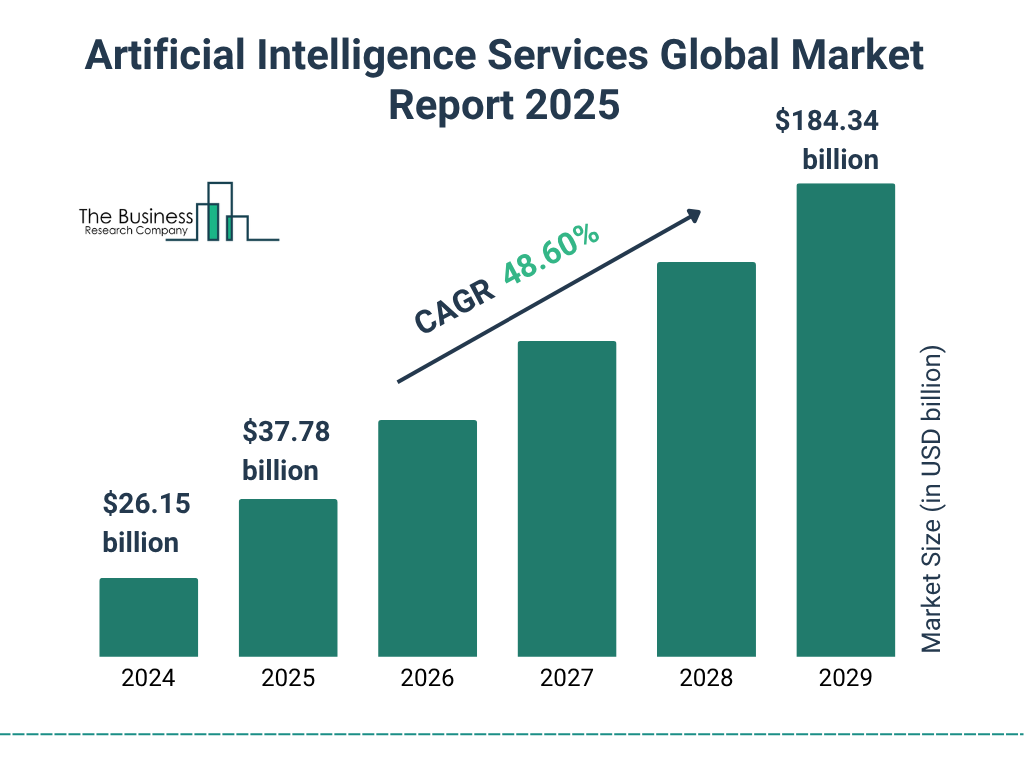
thebusinessresearchcompany.com
AI Services Market Drivers, Size & Research Report 2025-2035
Image: AI Services Market Drivers, Size & Research Report 2025-2035. Alt text: See AI Statistics 2025 market growth chart illustrating rapid expansion.
To put this in perspective, the AI market’s growth outpaces many traditional sectors. Consider linking this to broader trends in our AI Trends 2026 guide for more insights.
- Global AI market: $244B–$390B in 2025
- GenAI investment: $33.9B globally
- Projected CAGR: 30.6%–36.89% through 2030
This expansion isn’t just numbers—it’s transforming how businesses operate, from predictive analytics to automated customer service.
Key Drivers Behind AI Market Surge
Advancements in computational power and data availability have lowered barriers. Cloud platforms like AWS and Azure made AI accessible, enabling even small firms to deploy sophisticated models. McKinsey’s survey showed 88% of organizations using AI in at least one function.
Investment trends also shifted. Venture capital poured into GenAI, with $33.9B in private funding, up 18.7% from 2023. This capital influx accelerated innovation, leading to more efficient models and broader applications.
For beginners, think of AI market growth like the smartphone boom—once niche, now ubiquitous. Enterprise buyers should note that sectors like healthcare and finance saw the highest ROI from AI implementations.
AI Adoption Rates in 2025: From Experimentation to Enterprise Scale
Adoption of AI technologies hit new milestones in 2025, because with businesses and individuals embracing tools at record speeds. McKinsey’s global survey on AI Statistics 2025 snowing that 88% of respondents’ organizations used AI in at least one business function, up from 78% in 2024.
Globally, Microsoft reported generative AI adoption at 16.3% of the world’s population by late 2025, a jump from 15.1% mid-year. In the U.S., the St. Louis Fed noted overall GenAI usage at 54.6%, with work-related adoption at 37.4%.
Enterprises led the charge. PwC found 87% of large companies (10,000+ employees) implementing AI, with mid-market firms at 75%. This widespread integration spans functions like marketing (92% plan to invest) and customer service.
Teens and young adults showed high engagement. Pew Research indicated 64% of U.S. teens used AI chatbots, with 30% daily. This generational shift suggests AI will be second nature for future workforces.
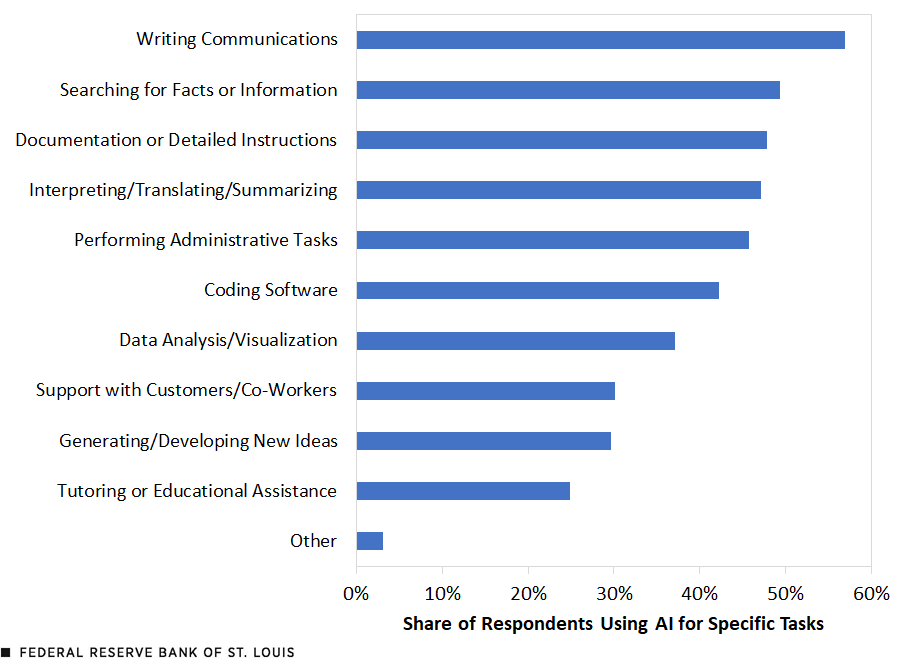
The Rapid Adoption of Generative AI | St. Louis Fed
Image: The Rapid Adoption of Generative AI. Alt text: Visualization of AI adoption statistics in 2025 showing upward trends.
Explore how this ties into enterprise strategies in our Enterprise AI Adoption Guide.
- Global GenAI users: 16.3% of population
- U.S. overall adoption: 54.6%
- Enterprise adoption: 87% for large firms
Challenges persist, though. Many organizations remain in piloting stages, with only 33% scaling AI enterprise-wide. Overcoming this requires better data infrastructure and skills training.
Sector-Specific Adoption Insights
In marketing, 88% of professionals use AI daily. The market for AI in marketing is set to reach $217.33B by 2034.
Healthcare saw 223 FDA-approved AI devices in 2023, a trend accelerating into 2025. Finance and retail expect 80% adoption by 2025.
For tech enthusiasts, note the rise in AI agents: 23% of organizations scaled them in 2025. This autonomy marks a shift from assistive to proactive AI.
AI Impact on Jobs in 2025: The Double-Edged Sword
The AI Impact of Major Job Cuts Artificial Intelligence dominated discussions in 2025, with mixed outcomes. While AI displaced roles, it also created new opportunities. CNN reported that highly AI-exposed jobs grew 1.7% post-COVID, faster than pre-pandemic rates.
However, entry-level positions suffered. MIT found AI could replace 11.7% of U.S. jobs, equating to $1.2T in wages. Stanford noted a 16% employment decline for 22-25-year-olds in AI-exposed occupations.
Major layoffs linked to AI totaled 55,000 in the U.S., per Challenger, Gray & Christmas. Companies like Amazon (14,000 cuts) and Meta (600 in AI units) cited efficiency gains.
On the positive side, AI is projected to create 97 million new jobs by 2025, per World Economic Forum. Wages in AI-exposed roles rose 3.8% post-COVID.
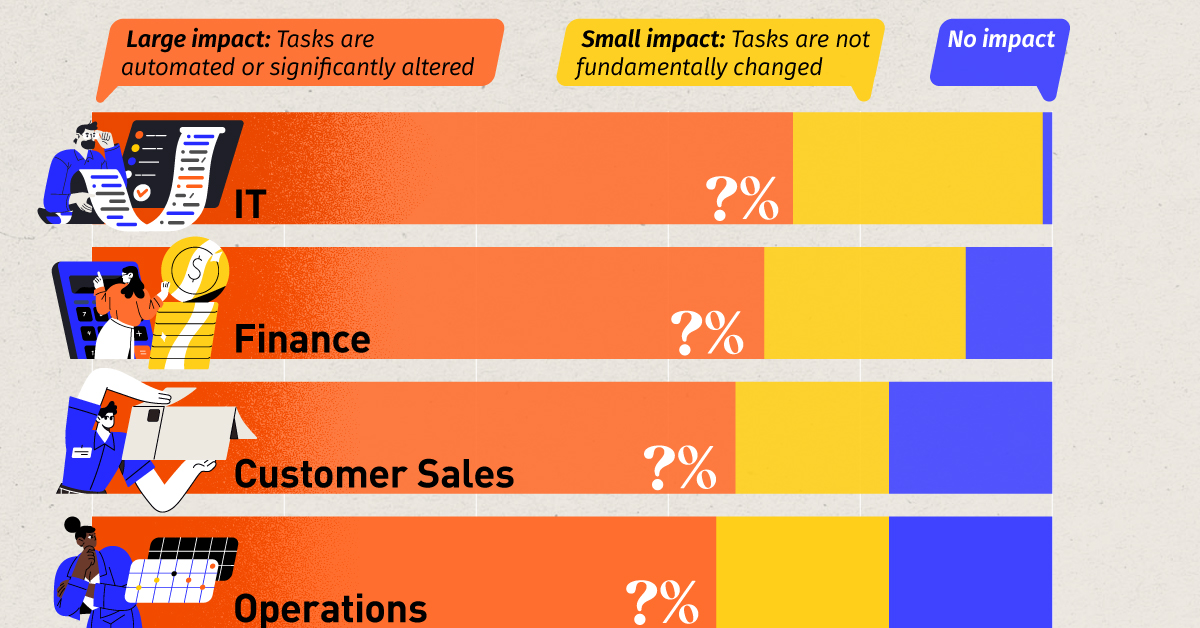
Chart: The Jobs Most Impacted by AI
Image: Chart: The Jobs Most Impacted by AI. Alt text: Infographic on AI impact of major job cuts in 2025.
Dive deeper into job market shifts in our AI Job Trends Analysis.
- AI-related layoffs: 55,000 in U.S.
- Net job creation projection: 12M by 2025
- Entry-level decline: 16% for young workers
For enterprise buyers, this means reskilling workforces is crucial. PwC noted industries with high AI exposure saw 3x revenue growth.
Major Job Cuts: Case Studies
Amazon’s 14,000 corporate cuts were tied to AI efficiencies. Microsoft laid off 15,000, investing heavily in AI.
Tech sector lost 244,851 jobs globally, with AI as a key driver. Yet, Vanguard found AI-exposed occupations growing overall.
Beginners should understand AI augments rather than replaces in many cases, boosting productivity by 5.4% weekly.
Ethical Challenges and AI Governance in 2025
As AI proliferated, ethical concerns intensified. Stanford HAI reported rising AI-related incidents, with uneven responsible AI (RAI) evaluations. McKinsey noted increased mitigation efforts for risks like privacy and bias.
Bias remains a top issue. UNESCO’s AI Ethics Recommendation emphasizes inclusivity and non-discrimination. Harvard DCE highlighted privacy and transparency challenges.
Governments stepped up: U.S. issued 59 AI regulations in 2024, doubling from 2023. Global legislative mentions of AI rose 21.3%.
Synthetic data from GenAI poses risks like research misconduct, per NIEHS.
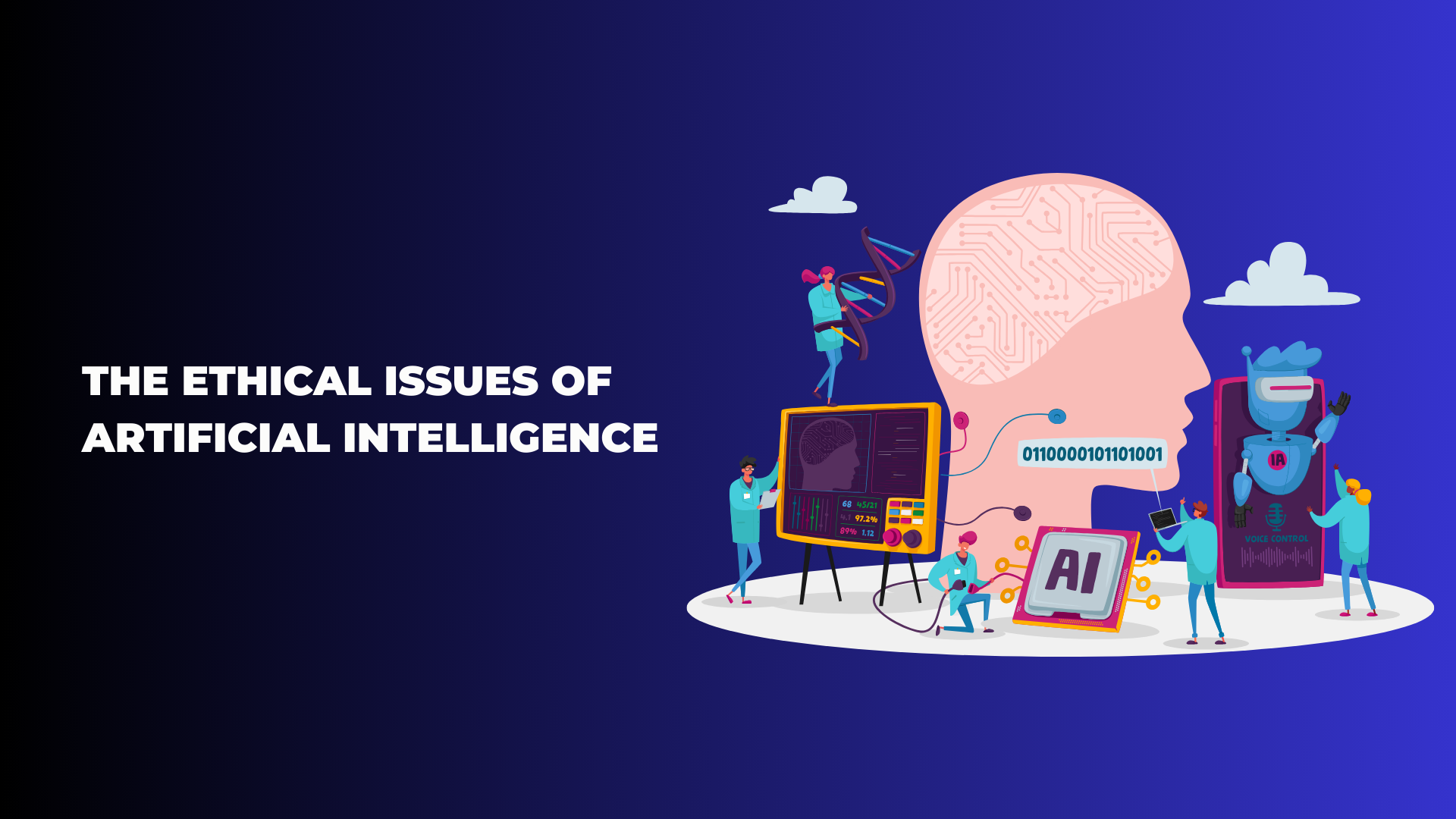
The Ethical Issues Of Artificial Intelligence – Eastgate Software
Image: The Ethical Issues Of Artificial Intelligence. Alt text: Illustration of AI ethics concerns in 2025.
Learn more about ethical frameworks in our AI Ethics Guide.
- AI regulations: 59 in U.S. (2024)
- Risk mitigation: Up to 4 risks addressed per org
- Global AI mentions: 21.3% increase
Tech companies face accountability issues, with Gartner predicting 60% AI project abandonment by 2026 due to data quality.
Addressing Bias and Transparency
Inclusive data sets are key to reducing bias. GLOBIS Insights advocates for ethical principles like fairness.
Transparency in AI decisions is crucial, especially in high-stakes areas like healthcare. Medium discussions highlight solutions like explainable AI models.
For enterprise buyers, adopting RAI frameworks ensures compliance and trust.
Future AI Trends Beyond 2025: What to Watch
Looking ahead, AI agents and multimodal models will dominate. McKinsey predicts agentic AI transforming workflows. Efficiency gains continue, with inference costs dropping 280-fold since 2022.
Ethical AI will evolve, with more governance. Forbes experts foresee complex regulations in 2025.
Job markets will shift toward AI-literate roles, with 100M AI jobs globally by 2025.

The Future of AI in 2025: Trends, Opportunities, and Challenges …
Image: The Future of AI in 2025: Trends, Opportunities, and Challenges. Alt text: Trends visualization for AI in 2025 and beyond.
Stay updated with our Future AI Predictions.
- AI efficiency: 30% annual cost decline
- Agentic AI: Redefining governance
- Global investment: $100B+ initiatives
Challenges like energy efficiency and skill gaps will need addressing for sustainable growth.
Conclusion: Embracing the AI Revolution
As we’ve explored through See AI Statistics 2025, artificial intelligence is not just a trend—it’s a fundamental shift. From market growth exceeding $390B to the AI Impact of Major Job Cuts Artificial Intelligence creating both challenges and opportunities, the data underscores the need for strategic adoption. Tech enthusiasts, beginners, and enterprise buyers alike should prioritize ethical, inclusive AI integration to thrive. Ready to dive deeper? Subscribe to our newsletter for the latest insights and take action today—explore AI tools that fit your needs and join the conversation in the comments below.
